Dry Socket: How to Recognize It, Treat It, and Avoid It
By
Dr.
9 min read
Short answer: Dry socket (alveolar osteitis) happens when the blood clot in a tooth socket is lost or breaks down too early, leaving the bone underneath exposed. The main sign is pain that gets worse, not better, 1 to 3 days after an extraction. A dentist treats it by cleaning the socket and placing a soothing medicated dressing.
You had a tooth out, the first day or two went fine, and then the pain suddenly got worse instead of better. That pattern is the classic warning sign of dry socket, a painful but treatable problem that can follow a tooth extraction, especially wisdom tooth removal.
The good news is that dry socket is uncommon and very treatable, and a few simple habits lower your risk. This guide explains how to recognize it, what treatment involves, and how to protect the healing socket. If you are planning a tooth extraction in Oakville, you will leave our office with detailed aftercare instructions that cover these steps.
What Is Dry Socket?
Dry socket is a painful condition that happens when the blood clot in an empty tooth socket is lost or breaks down before the area has healed. Its medical name is alveolar osteitis.
After a tooth is removed, a blood clot forms in the socket. That clot protects the bone and nerve endings underneath and acts as the foundation for new tissue. Without it, the bone and nerves are exposed to air, food, and fluids, which can cause significant pain.
It is not common. According to Cleveland Clinic, it affects about 2% to 5% of tooth extractions, and it is more common after wisdom teeth are removed. A difficult or surgical extraction also raises the odds.
What Are the Symptoms of Dry Socket?
The main symptom of dry socket is pain that gets worse a few days after an extraction instead of slowly easing. Some soreness after an extraction is normal. The difference is the pattern: normal pain improves a little each day, while dry socket pain builds.
Watch for these signs:
Pain that increases 1 to 3 days after your extraction, instead of slowly improving
Throbbing pain that spreads to your ear, eye, temple, or neck on the same side
An empty-looking socket, where you can’t see a dark blood clot
Visible bone in the socket, which may look whitish
A bad taste or bad breath coming from the extraction site
Pain relievers that stop helping the way they did in the first day or two
MedlinePlus, the health information site of the U.S. National Library of Medicine, notes that some people also run a slight fever.
When Does Dry Socket Start?
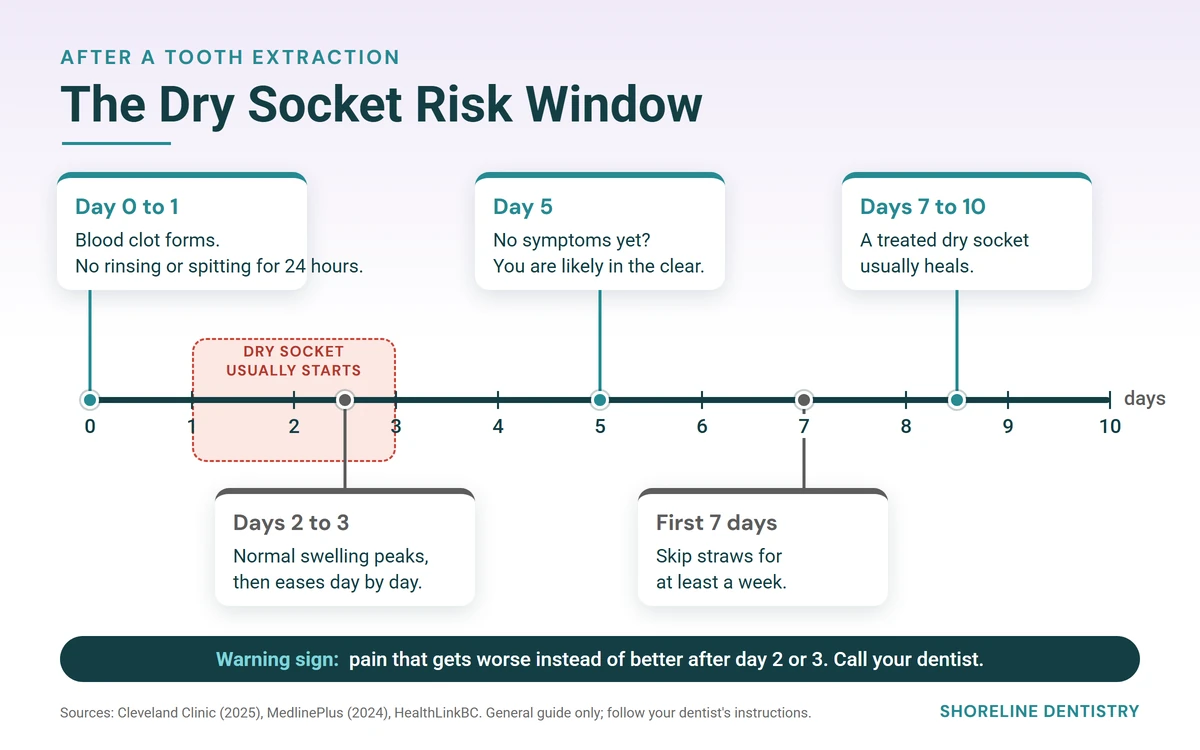
Dry socket usually starts 1 to 3 days after a tooth is pulled. Cleveland Clinic says it most often develops within the first three days, and if you have no symptoms by day five, you are likely in the clear. The timeline below shows that risk window.
What Does Dry Socket Look Like vs Normal Healing?
A dry socket looks like an empty hole where the tooth was, sometimes with a whitish layer of bone at the bottom. A normally healing socket is filled with a dark red clot for the first few days. After that, new gum tissue slowly covers it, and that tissue can look white or creamy, which is a healthy sign.
Because the two can be hard to tell apart in a mirror, use how it feels as your guide. This quick comparison can help:
What you notice
Normal healing
Possible dry socket
Pain
Eases a little each day
Gets worse after day 1 to 3
The socket
Dark clot, then soft new tissue
Looks empty, may show bone
Where it hurts
Mostly around the site
Can spread to the ear, eye, or temple
Taste or smell
Fades as the site heals
Bad taste or bad breath
Pain relievers
Keep pain manageable
Often help less
Who Is More Likely to Get Dry Socket?
Anyone can develop dry socket, but some things raise the risk:
Smoking or other tobacco use. Suction can pull the clot loose, and smoking also slows healing.
Using a straw, spitting, or rinsing hard in the first few days
Wisdom tooth removal, especially a difficult or surgical extraction
A previous dry socket after an earlier extraction
Hormonal birth control, which Cleveland Clinic lists as a risk factor
Poor oral hygiene or not following aftercare instructions during healing
If any of these apply to you, tell your dentist before your extraction, so your care and aftercare can be planned around it.
How Is Dry Socket Treated?
Your dentist treats dry socket by cleaning the socket and placing a medicated dressing that protects the bone and eases the pain. Don’t try to treat it yourself. If you think you have it, call your dentist.
Treatment usually involves these steps:
Gently cleaning the socket with salt water or an antibacterial rinse to remove food and debris
Placing a medicated dressing or paste in the socket to cover the exposed bone and calm the pain
Pain relief advice, such as over-the-counter acetaminophen or ibuprofen if they are safe for you, and sometimes a prescription
Follow-up visits if needed to check healing or change the dressing
In some cases, your dentist may also prescribe antibiotics or show you how to rinse the socket gently at home. Prompt treatment can relieve the pain and help the socket heal.
If your pain is building a few days after an extraction, don’t wait it out. Our emergency dentist in Oakville page explains how we handle urgent problems, including same-day appointments for urgent needs.
How Long Does Dry Socket Last?
With proper care, a dry socket usually heals within 7 to 10 days, according to Cleveland Clinic. Without treatment, the pain can last for several days, as HealthLinkBC notes, so it’s worth getting it checked rather than waiting.
When Should You Call Your Dentist Right Away?
Dry socket isn’t the only reason to check in after an extraction. Call us promptly if you notice:
Pain that keeps getting worse after the second or third day
Bleeding that won’t slow down with steady pressure on gauze
Swelling that increases after the first two to three days
A fever, pus, or a foul taste that doesn’t go away
Numbness that lasts long after the anesthetic should have worn off
It’s always better to call and be reassured than to wait and worry.
Planning an extraction and want to lower your risk?
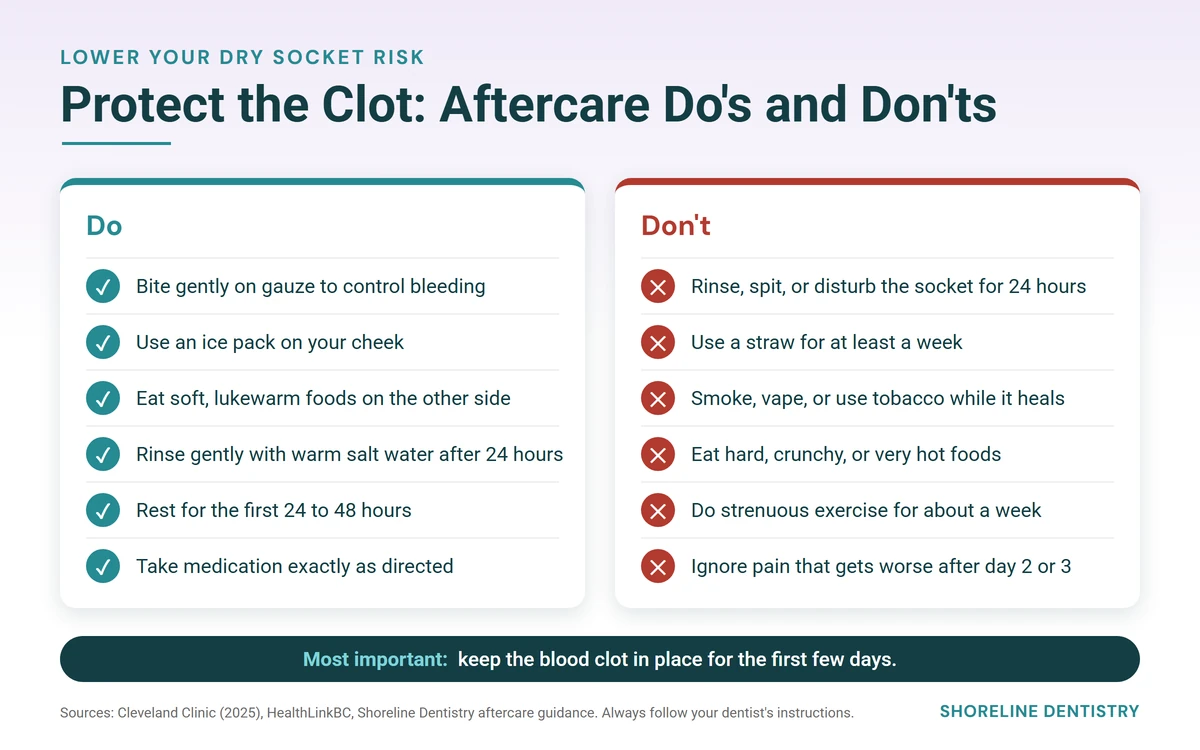
You can lower your risk of dry socket by protecting the blood clot during the first few days, when the risk is highest. After your extraction, follow these steps:
Bite gently on gauze to control bleeding, as instructed.
Don’t rinse, spit, or disturb the socket for the first 24 hours. After that, rinse gently with warm salt water as your dentist advises.
Skip straws for at least a week. Use a spoon for smoothies and soups.
Don’t smoke, vape, or use tobacco while the socket heals. Ask us how long to wait in your situation.
Stick to soft foods and avoid hard, crunchy, or very hot foods. Chew on the other side.
Use an ice pack on the outside of your cheek to help with swelling.
Rest for the first 24 to 48 hours, and avoid strenuous exercise for about a week.
Keep your mouth clean by brushing your other teeth carefully and avoiding the extraction site at first.
Take any medication exactly as directed, and follow the rest of your aftercare instructions.
Most cases start within the first three days, so that is when these habits matter most. The checklist below sums up what to do and what to avoid.
How Does Shoreline Dentistry Help Lower Your Risk?
Good aftercare starts before your tooth comes out. At Shoreline Dentistry in Oakville, a tooth extraction appointment typically includes:
A thorough exam and digital X-rays to plan the gentlest approach for your tooth
Local anesthesia to numb the area, so most patients feel pressure rather than pain
A gentle technique planned to minimize trauma to the surrounding bone and gum
Detailed aftercare instructions to protect the clot and lower your risk of complications
Follow-up care if needed, and a team you can call with questions while you heal
If a wisdom tooth is the problem, our wisdom tooth removal page explains how we plan those extractions. Once the site has healed, we can also talk about replacing the tooth with a dental implant or a dental bridge.
If you’re planning an extraction, or you’re healing from one and something doesn’t feel right, call Shoreline Dentistry at (905) 827-6453 or visit us at 11 Bronte Rd, Unit 30, Oakville, ON L6L 0E1.
Frequently Asked Questions
How do I know if I have dry socket?
The most common sign is pain that gets worse 1 to 3 days after your extraction, often spreading toward your ear or temple. You may also see an empty-looking socket or bone, or notice a bad taste. If your pain is building instead of easing, call your dentist.
How common is dry socket?
Dry socket affects about 2% to 5% of tooth extractions, according to Cleveland Clinic. It is more common after wisdom tooth removal and after more difficult extractions.
How long does dry socket last?
With treatment and good care, a dry socket usually heals within 7 to 10 days, according to Cleveland Clinic. Without treatment, the pain can linger for several days, so it’s worth seeing your dentist early.
Can dry socket heal on its own?
The socket will eventually heal, but the pain can last for several days without treatment. Seeing your dentist to clean the socket and place a medicated dressing can relieve the pain and help it heal.
Can I treat dry socket at home?
Not fully. Gentle salt-water rinses, a cold pack, and pain relievers taken as directed can ease discomfort, but a dentist needs to clean the socket and place a dressing. Call your dentist rather than waiting it out.
How long should I avoid straws after an extraction?
Cleveland Clinic advises skipping straws for at least a week. The suction can pull the blood clot out of the socket, so drink from a cup and eat smoothies with a spoon.
When am I no longer at risk of dry socket?
It usually develops within the first three days. If you have no symptoms by day five, you are likely in the clear, but keep following your aftercare instructions until your dentist says the site has healed.
On this page
Book Your Visit
Have a question about this topic? Our team is happy to help.