
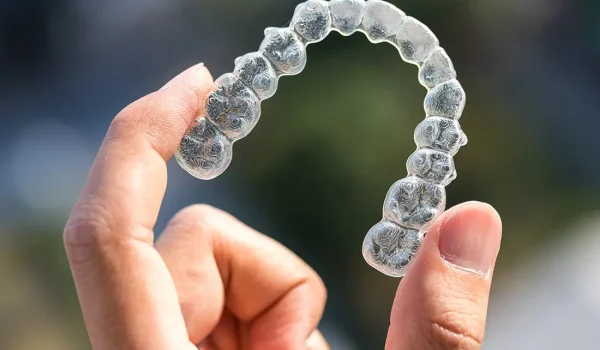
How Much Does Invisalign Cost in Canada? (Quick Answer)
Invisalign cost in Canada sits between $3,000 and $8,500 CAD in 2026. Simple corrections like minor crowding land near the bottom of that range. Severe bite issues and full-arch cases push toward the top. Most adults pay between $4,500 and $6,500 for a complete treatment plan.
That’s roughly the price of a mid-range kitchen renovation — except this one travels with you, photographs well in every selfie, and outlasts every cabinet finish you’ll ever pick.
Where you fall in the range depends on three things: how much your teeth need to move, where you live, and what your provider quietly bundles into the quote.
Average Invisalign Cost in Canada by Treatment Type
Invisalign Canada offers five main treatment types. Your dentist or orthodontist picks the right one after a 3D scan. Here’s how the 2026 ranges break down:
| Treatment Type | Best For | Typical Cost (CAD) | Treatment Length |
|---|---|---|---|
| Invisalign Express | Touch-ups, minor relapse | $1,800–$3,500 | 3–6 months |
| Invisalign Lite | Mild crowding or spacing | $3,000–$4,500 | 6–9 months |
| Invisalign Moderate | Moderate alignment work | $4,000–$6,000 | 9–14 months |
| Invisalign Comprehensive | Complex bites, full corrections | $5,500–$8,500 | 12–24 months |
| Invisalign Teen | Teens with developing jaws | $4,500–$7,500 | 12–18 months |
Pricing benchmarked against provider quotes published on and the .
Most adult patients land in either the Moderate or Comprehensive tier. Express looks affordable on paper, but only a small slice of patients truly qualify for it.
Invisalign Cost in Ontario vs. Other Provinces
Invisalign Ontario pricing tends to sit higher than the national average, largely because of urban overhead and patient demand in cities like Toronto, Mississauga, and Ottawa.
Here’s how the provinces stack up in 2026:
- Ontario: $4,500–$8,000 for adult comprehensive
- British Columbia: $4,800–$8,200 (Vancouver leads the country on price)
- Alberta: $4,200–$7,500 (Calgary and Edmonton are competitive)
- Quebec: $3,800–$7,000 (Montreal often runs slightly under Toronto)
- Atlantic provinces: $3,500–$6,800
Driving 30–60 minutes outside a major centre often saves you 10–20%. Just plan around the monthly check-ins — clear aligners need periodic visits to track your progress.
What Affects Your Invisalign Price?
Two patients with nearly identical smiles can walk out of the same consultation with very different quotes. Here’s what actually moves the number:
- How much movement do your teeth need? A few crooked front teeth cost less than a full bite correction. Complexity drives tray count, and tray count drives the price.
- Total aligner trays. Simple cases run 14–20 trays. Comprehensive cases stretch to 40, 50, even 70.
- Where the clinic operates, Downtown Toronto and Vancouver carry higher overhead than suburban or rural practices. Real estate finds its way into every quote.
- General dentist vs. orthodontist. Orthodontists typically charge $500–$1,500 more, but they specialize in complex movement and bite correction.
- What’s bundled in. Retainers, refinements, whitening trays, and follow-up appointments may or may not be included. The headline number can deceive without a line-by-line breakdown.
- Imaging and diagnostics. Most clinics include 3D scans in the initial consult. Some bill X-rays or physical models separately.
- Hidden refinement fees. Mid-treatment touch-up trays can add $500–$1,500 if they weren’t built into your original plan.
Is Invisalign Covered by Insurance in Canada?
Yes — partially. Most Canadian dental plans cover orthodontic treatment under a specific benefit category, but the rules are strict.
Here’s what to expect:
- Coverage percentage: 25–50% of the total
- Lifetime maximum: $1,500–$3,000 per person (the cap is lifetime, not annual)
- Age limits: Many plans restrict ortho coverage to dependents under 18. Adult ortho coverage exists but is less common.
- Pre-authorization: Your dentist submits the treatment plan to your insurer for approval before you begin
- HSAs and FSAs: Health Spending Account dollars can be used to cover what insurance won’t
A 30-second at-home check: Open your insurance booklet PDF (most insurers email one each year), hit Ctrl+F, and search “orthodontic.” You’ll see your exact coverage percentage, lifetime maximum, and age limit in under a minute. No phone call required.
For a deeper read on how Canadian dental plans actually work, see our Canadian dental care or the ‘s patient resource centre.
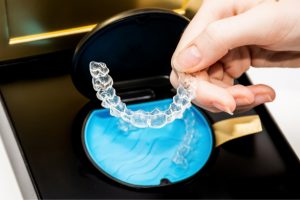
Invisalign Cost in Canada Without Insurance — How to Afford It
No coverage? You’re not stuck. The Invisalign cost in Canada without insurance can still fit a normal household budget with the right financing path.
Here’s what most uninsured patients actually use:
- In-house payment plans. Many clinics roll the full cost into a 12–24 month plan at 0% interest. Typical setup: $500–$1,500 down, then $150–$400 monthly.
- Third-party dental financing. , iFinance Canada, and PayBright offer 0% promotional periods of 6–18 months with credit approval.
- Personal line of credit. Bank-issued LOC rates usually beat dental credit card interest if you can’t clear the balance during a 0% promo.
- CRA medical expense tax credit. When Invisalign is prescribed to correct a medical issue — such as a malocclusion, bite problem, or crowding — rather than purely for appearance, the out-of-pocket amount can qualify as an eligible medical expense. You can claim total medical expenses above the lesser of 3% of your net income or the annual CRA limit (about $2,833 for 2026). Keep your treatment plan and confirm with a tax professional.
- Workplace Health Spending Account. If your employer provides one, apply it to any portion of insurance that doesn’t cover.
A $6,000 treatment broken into $250 a month for 24 months is far easier to absorb than one lump-sum payment. Just confirm whether retainers and refinements are baked into that monthly figure — or billed separately at the finish line.
Invisalign vs Traditional Braces: Cost Comparison
Metal braces used to win on price by a wide margin. The gap has narrowed as clear aligners scaled up.
| Factor | Invisalign | Traditional Braces |
|---|---|---|
| Cost (CAD) | $3,000–$8,500 | $3,500–$7,000 |
| Treatment time | 6–24 months | 18–36 months |
| Visibility | Nearly invisible | Visible metal or ceramic brackets |
| Removable | Yes (eat, brush, floss normally) | No |
| Office visits | Every 6–10 weeks | Every 4–6 weeks |
| Food restrictions | None (trays come out) | Avoid hard, sticky, sugary foods |
How to Get the Best Price on Invisalign in Canada
The cost of Invisalign in Canada is rarely a fixed number. A few smart moves can save you hundreds — sometimes thousands.
- Book 2–3 free consultations. Most clinics offer the initial scan and quote at no charge. Bring the same set of questions to each one so the comparison is clean.
- Ask for the full bundle in writing. Does the quote include retainers? Refinements? Whitening trays at the end? An itemized breakdown beats the headline number every time.
- Choose an experienced, certified Invisalign provider. Invisalign ranks providers by case volume (Bronze up to Diamond), but tier alone doesn’t equal quality — ask how many cases like yours the dentist has treated and to see before-and-after results. You can verify any provider’s status on Invisalign.ca.
- Be cautious with rock-bottom offers. A “$1,999 Invisalign” promotion almost always caps the tray count. If your case needs more, you’ll be back at full price for the extras.
- Ask about cash discounts. Some clinics knock 5–10% off when you skip financing and pay upfront.
- Time it around your benefit year. If your insurance lifetime maximum still has room and your annual maximum resets in January, ask the clinic to plan your start date so two benefit years overlap your treatment.
Searching for an Invisalign provider in Oakville? Cross-check Google reviews and Invisalign certification before booking. Shoreline Dentistry is a certified Silver Invisalign Provider in Oakville — book a consultation to get your personalized treatment quote.
Frequently Asked Questions
1. Is Invisalign worth the cost in Canada?
For most adults, yes. The teeth straightening result lasts decades, blends in at work, and doesn’t restrict what you eat. Worth depends on how much the misalignment affects your bite, your speech, or how you feel in photos.
2. How much is Invisalign per month in Canada?
With a typical 24-month plan, expect $150–$400 per month after a modest down payment. A $5,500 treatment financed at $229 a month over two years is a common arrangement.
3. Does OHIP cover Invisalign?
No. OHIP — and every other provincial health plan in Canada — excludes orthodontic treatment, including Invisalign. Coverage only comes through private dental insurance, employer benefits, or paying out of pocket.
4. Can I get Invisalign for under $3,000 in Canada?
Sometimes. Invisalign Express plans for very minor cases can come in under $3,000, especially in smaller markets. Always read the quote carefully — if your case needs more than 14 trays, you’ll likely cross the $3,000 line.
5. How long does Invisalign treatment take?
Most adults finish in 12–18 months. Express cases wrap up in 6 months. Complex bites can stretch to 24 months. Wearing your trays 20–22 hours a day is by far the biggest factor in finishing on schedule.
Keep Reading