
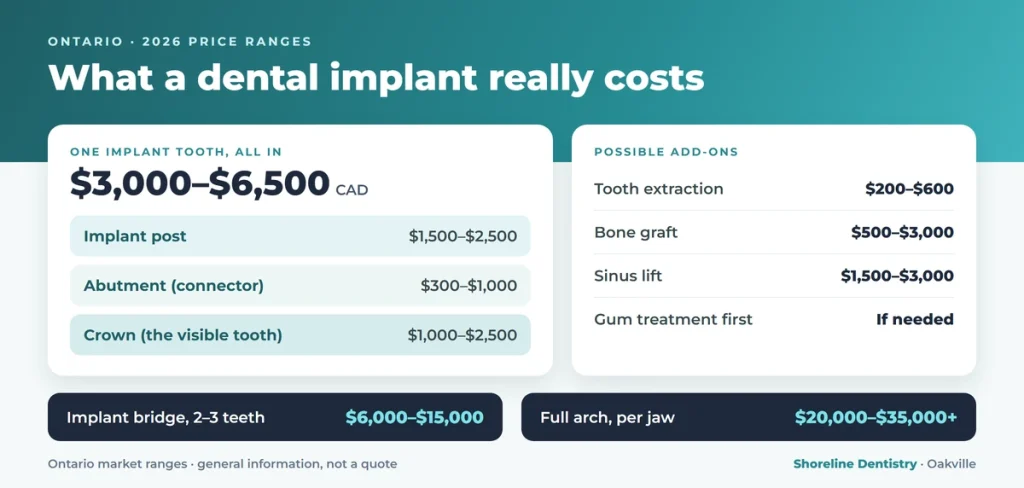
If you are pricing a dental implant in Ontario, here is the short answer: a single implant with its abutment and crown typically costs $3,000 to $6,500 in 2026. Replacing two or three teeth with an implant-supported bridge usually runs $6,000 to $15,000, and a full arch of fixed teeth can reach $20,000 to $35,000 or more per jaw. Where your own quote lands depends on your bone, your gums, and how much preparation your mouth needs before the implant goes in.
A headline number is a starting point, not a plan. This guide breaks the dental implant cost into its parts, shows which add-ons can change the total, explains why two quotes for the same tooth can differ by thousands, and sets out what private insurance and the Canadian Dental Care Plan will and will not pay for. At Shoreline Dentistry in Oakville, these are the questions we hear most often from patients in Oakville, Burlington, and Mississauga who are weighing implants.
Dental Implant Cost in Ontario at a Glance
The biggest factor in the price is how many teeth you are replacing and how they are held in place. These are typical Ontario ranges for a finished result, including the implant, the connecting abutment, and the teeth on top.
| What you are replacing | Typical Ontario cost (2026, CAD) |
|---|---|
| One tooth: implant, abutment, and crown | $3,000 to $6,500 |
| Two or three teeth on an implant-supported bridge | $6,000 to $15,000 |
| Implant-retained (snap-on) denture, per arch | $3,000 to $8,000 |
| Full arch of fixed teeth (All-on-4 style), per jaw | $20,000 to $35,000+ |
| Both arches of fixed teeth | $40,000 to $70,000+ |
Whether you searched for a tooth implant cost in Ontario or the price of a full arch, these are market ranges across the province, not our office’s fee schedule. A snap-on denture can cost less than a single implant tooth because it uses as few as two implants and one removable denture instead of individual crowns; our snap-on dentures cost guide covers that option in detail. No dentist can quote you from a table, but a table can tell you whether a quote you have been given sits inside the normal range.
What You Are Paying For: The Three Parts of an Implant
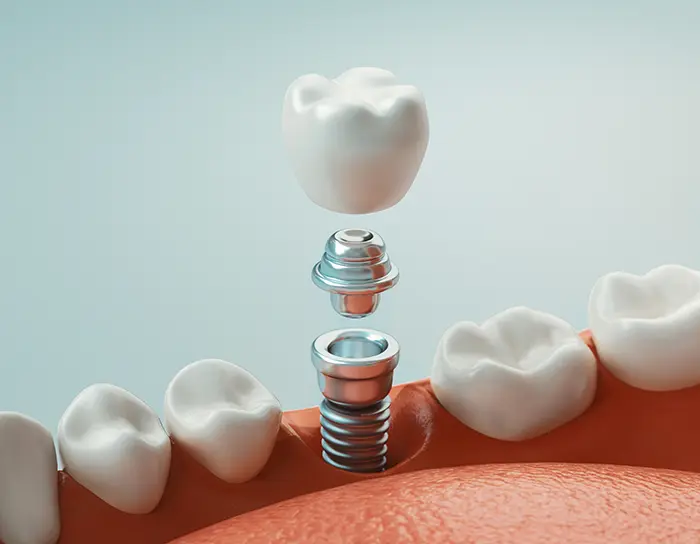
A dental implant is not one item. It is a small assembly, and each part is priced separately in most itemized quotes.
- The implant post: a titanium or zirconia screw placed in the jawbone, where it fuses with the bone and acts as the new root. The post itself typically costs $1,500 to $2,500.
- The abutment: the connector that joins the post to the visible tooth, usually $300 to $1,000 depending on whether it is stock or custom-made.
- The crown: the tooth you actually see and chew with, usually $1,000 to $2,500 depending on the material, such as porcelain or zirconia, and how much lab work it needs.
Planning comes first. At Shoreline, implants are planned with a CBCT scan, a detailed 3D image of your jaw, and placed with computer-guided planning so each one sits in the position the plan calls for. When you compare quotes, check whether the scan and planning are included or billed separately.
One common trap: some quotes cover only the surgical placement of the post. Always ask whether the abutment and crown are included, because together they can add $1,300 to $3,500 to the final bill.
Extra Procedures That Can Raise the Total
Many patients need some preparation before an implant can be placed, and these steps are priced on top of the implant itself.
- Tooth extraction: $200 to $600, if the damaged tooth is still in place. Our tooth extraction page explains what that visit involves.
- Bone graft: $500 to $3,000. After a tooth is lost, the jawbone slowly shrinks, and a graft rebuilds enough bone to hold the implant securely.
- Sinus lift: $1,500 to $3,000. Upper back teeth sit close to the sinus, and a lift adds bone height in that area when it is too thin.
- Treating gum disease: implants need healthy gums, so any active gum problems are treated before the implant goes in.
Whether you need any of these is decided at your consultation, not guessed from a price list. The longer a tooth has been missing, the more likely some bone rebuilding will be part of the plan.
Why Two Ontario Implant Quotes Can Differ by Thousands
It is common to collect two quotes and find they are thousands of dollars apart. That does not always mean one office is overcharging. Here is what usually explains the gap:
- The fee guide is a reference, not a rule. As the Ontario Dental Association explains, its suggested fee guide is a reference point, and dentists set their own fees, which can sit above or below it.
- What is bundled in. One quote may include the scan, abutment, crown, and follow-up visits, while another lists only the surgery.
- Materials and lab work. A custom abutment and a zirconia crown cost more than stock parts, and the dental lab is a real part of the price.
- Your case. A front tooth that has to match its neighbours perfectly, thin bone, or a nearby sinus all add time and complexity.
The fairest way to compare dental implant cost quotes is line by line. Ask each office for an itemized estimate so you can see exactly what you are paying for.
Does Insurance or the CDCP Cover Dental Implants?
Private dental insurance sometimes pays part of the cost, but coverage varies widely. Many plans treat implants as major restorative work, some cover only the crown portion, and others pay only what they would have paid for a less expensive alternative, such as a bridge or a denture. Annual maximums also limit how much a plan will pay in a single year. Before you commit, ask your dental office to send a predetermination to your insurer so you know your share in advance.
Does the CDCP cover dental implants? No. According to the Ontario Dental Association’s CDCP guide, implants and implant-related procedures are not covered under the Canadian Dental Care Plan. Shoreline Dentistry accepts the CDCP for services it does cover, and your dentist can talk you through alternative tooth replacement options that may be covered; our Canadian Dental Care Plan page explains how it works at our office.
Tax time. Dental expenses that are not purely cosmetic can often be claimed as medical expenses on your income tax return. Keep your receipts and confirm what applies to you with the Canada Revenue Agency or a tax professional.
How to Make Dental Implants More Affordable
There are sensible ways to manage the cost without cutting corners on the treatment itself:
- Stage the treatment. Placing the implant and restoring it with the crown happen months apart, so the cost can fall into two benefit years.
- Consider an implant-retained denture. If you are replacing most or all of your teeth, a snap-on denture on two or more implants costs far less than a full arch of fixed teeth.
- Use every benefit you have. A health spending account through work can often be used alongside your dental plan.
- Ask about payment options. Many offices can spread the cost of a larger treatment plan, so ask what is available before you decide.
- Do not wait too long. Bone loss continues after a tooth is lost, and a case that needs grafting later costs more than one treated promptly.
Are the Cheapest Dental Implants in Canada Worth It?
Searching for the cheapest dental implants in Canada is understandable, but the lowest number on a quote is not always the lowest cost in the end. Before choosing on price alone, check four things:
- What is included. A low price that leaves out the abutment, crown, scan, or grafting is not a low price.
- The components. Ask which implant system and materials will be used, because established systems make future repairs and replacement parts easier to source.
- Planning and experience. Careful planning and a dentist who places implants regularly reduce the risk of costly problems later.
- Follow-up care. Implants need check-ups, and if you travel for treatment, any adjustments or complications will have to be handled once you are home.
A well-planned implant can last for many years, and even a lifetime, with good care; only the crown may eventually need replacing. That long lifespan is why many patients find the value holds up against a bridge or denture that may need replacing sooner. Our guide to dental implants compares the options, and our tips on caring for implants long-term explain how to protect your investment.
How We Plan Your Implant Cost at Shoreline Dentistry
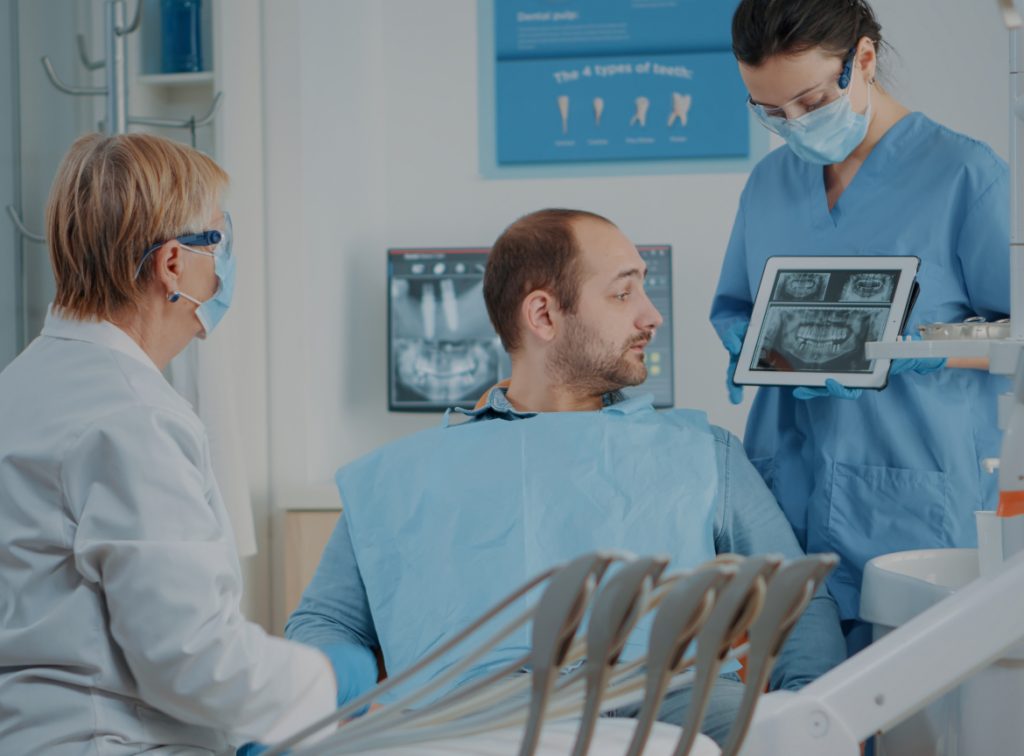
Your dental implant cost should never be a surprise. At your consultation, we evaluate your oral health, take the imaging we need, including a CBCT scan where implants are being planned, and check your bone and gums. We then give you a personalized treatment plan and a clear cost breakdown, so you can make an informed decision with every line in front of you.
Our team has more than 20 years of experience in general and cosmetic dentistry, and our dental implants in Oakville page explains each step of treatment, from guided placement to the final crown. If you are also comparing other options, we can walk you through crowns, bridges, and dentures side by side. To get a figure for your own mouth, call us at 905-827-6453 or book a consultation online.
Frequently Asked Questions
How much does a dental implant cost in Ontario?
A single dental implant with its abutment and crown typically costs $3,000 to $6,500 in Ontario in 2026. Extra procedures such as an extraction, bone graft, or sinus lift are usually priced separately and can add to that total.
How much is a tooth implant in Canada?
Prices are broadly similar across the country, but each province has its own suggested fee guide and dentists set their own fees. In Ontario, one tooth typically costs $3,000 to $6,500 for the implant, abutment, and crown combined.
Does the CDCP cover dental implants?
No. Implants and implant-related procedures are not covered under the Canadian Dental Care Plan. Your dentist can discuss other tooth replacement options that may be covered, and Shoreline Dentistry accepts the CDCP for the services it does cover.
Are dental implants covered by insurance?
Sometimes, in part. Many private plans treat implants as major restorative work, some cover only the crown, and some pay only the cost of a cheaper alternative such as a bridge. Ask your dental office to send a predetermination so you know your share before treatment.
How much do All-on-4 dental implants cost?
A full arch of fixed teeth on implants, often called All-on-4, typically costs $20,000 to $35,000 or more per jaw in Ontario. An implant-retained snap-on denture is a lower-cost alternative for many patients replacing a full arch.
Why are dental implants so expensive?
An implant combines minor surgery, precision components, a custom crown made by a dental lab, 3D planning, and several appointments over a number of months. You are also paying for a tooth replacement that can last for many years with good care.
Is a bone graft included in the price of a dental implant?
Usually not. A bone graft is typically priced separately, at about $500 to $3,000 in Ontario, and is only needed when there is not enough bone to hold the implant securely.
Are cheaper dental implants worth it?
They can be, but compare what is included before deciding. A low quote that leaves out the abutment, crown, planning, or follow-up care can end up costing more than a complete quote from the start.
Cost ranges in this guide reflect the Ontario dental market as of September 2026 and are provided for general information. They are not a quote, and they are not Shoreline Dentistry’s fee schedule.
Keep Reading