Dental Implants for Mississauga Patients: The Short Answer
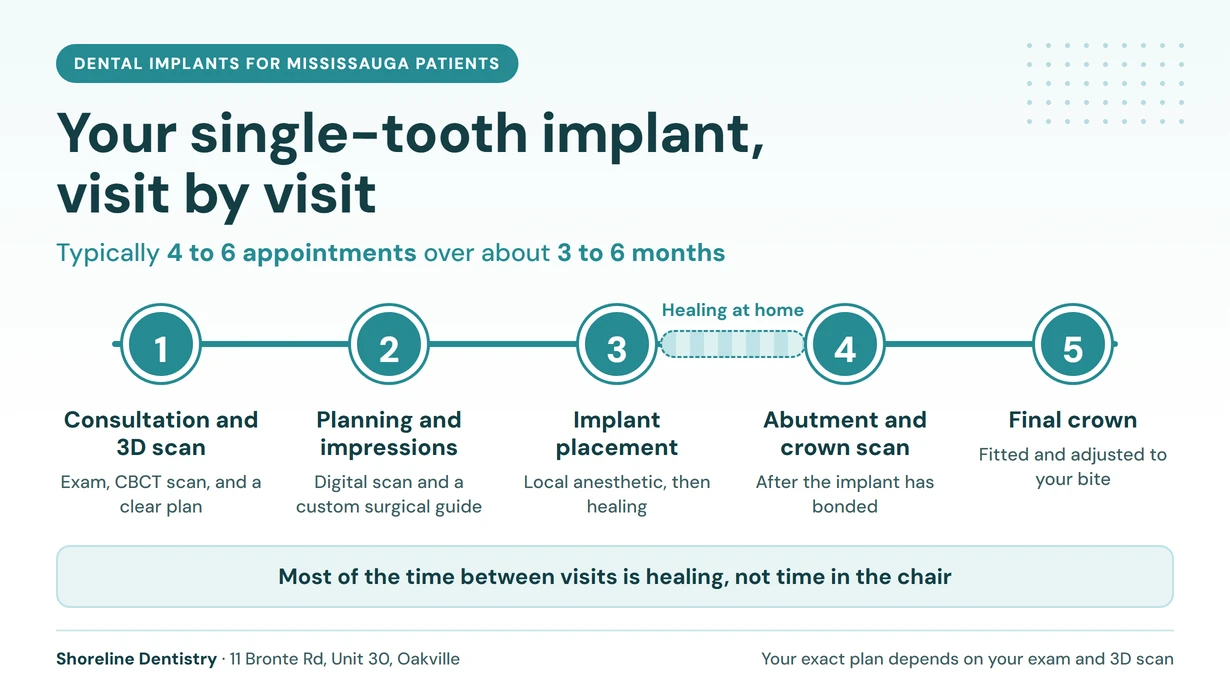
For a straightforward single-tooth implant, a typical plan works out to about four to six appointments over roughly three to six months. Most of that time is not spent in the dental chair. It is healing time, while the implant bonds with your jawbone and you carry on with your normal routine.
The three-to-six-month range is the one on our dental implants page. Cleveland Clinic says the bonding stage alone can take anywhere from three to nine months, depending on how quickly you heal, so treat the shorter range as a typical case, not a promise.
Your own number of visits may be higher if you need:
- A tooth removed first
- A bone graft or sinus lift to build up the area
- Gum disease treated before surgery
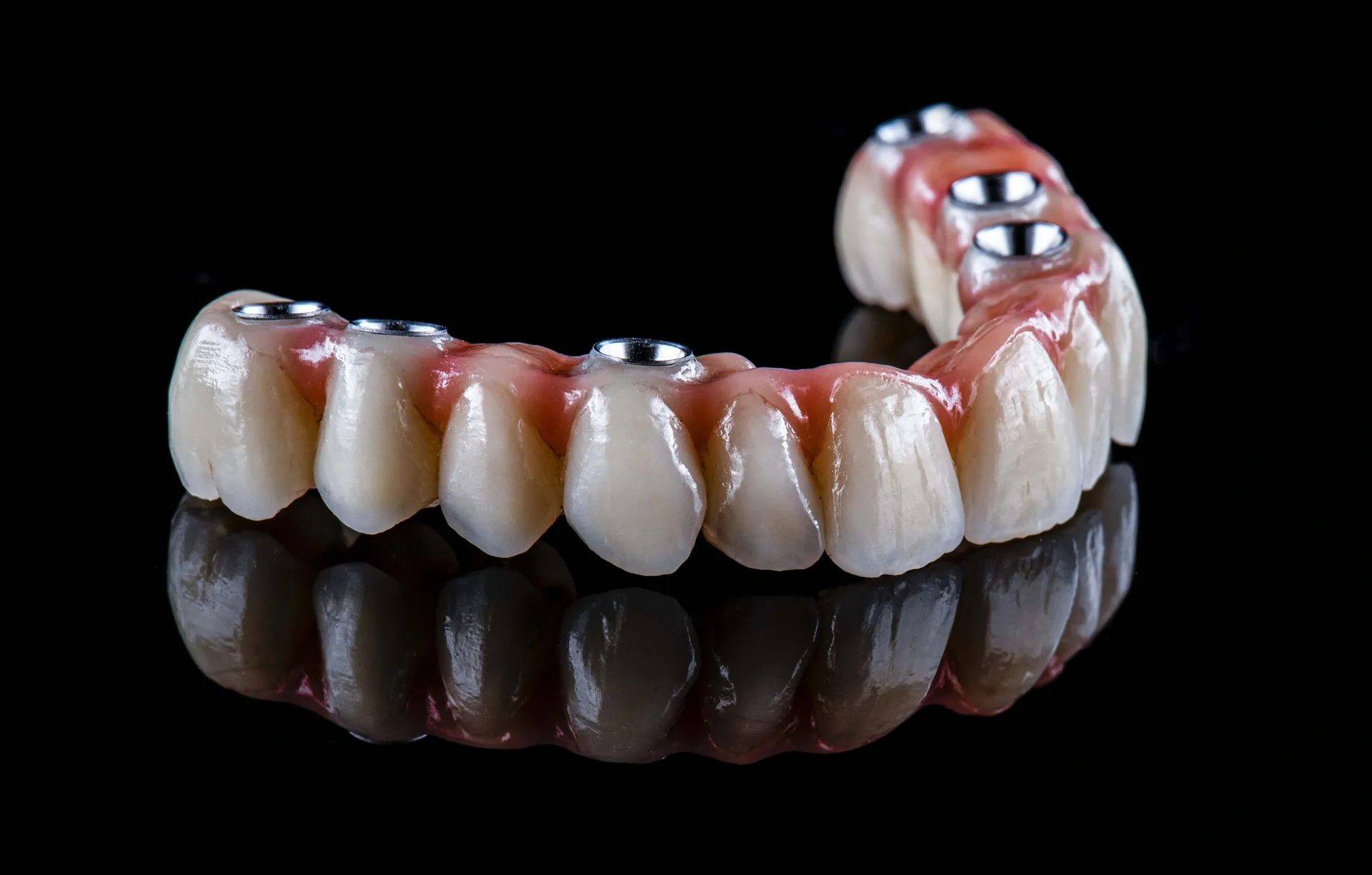
- More than one implant, or a full-arch treatment
Every mouth is different, so your exact plan comes after an exam and a 3D scan. Here is what a typical single-tooth path looks like.
What Happens at Each Dental Implant Visit?
Visit 1: Consultation and 3D CBCT Scan
Your first appointment is about getting answers. The dentist examines your mouth, checks your gums and bite, and talks through your health history and goals. You also have a CBCT scan, a detailed 3D X-ray that shows your jawbone, nerves, and sinuses.
The scan shows whether you have enough bone for an implant or whether you may need extra steps first. At the consultation, we also give you a personalized treatment plan and a clear cost breakdown, so you can decide with the full picture in front of you.
Visit 2: Treatment Planning and Digital Impressions
Next, a small scanner takes digital impressions, so there are no impression trays or putty. Using your scan and impressions, the dentist plans exactly where the implant should go and designs a custom surgical guide that supports placement in the planned position.
If travel is a concern, ask at your consultation whether any of these planning steps can be grouped into fewer trips in your case.
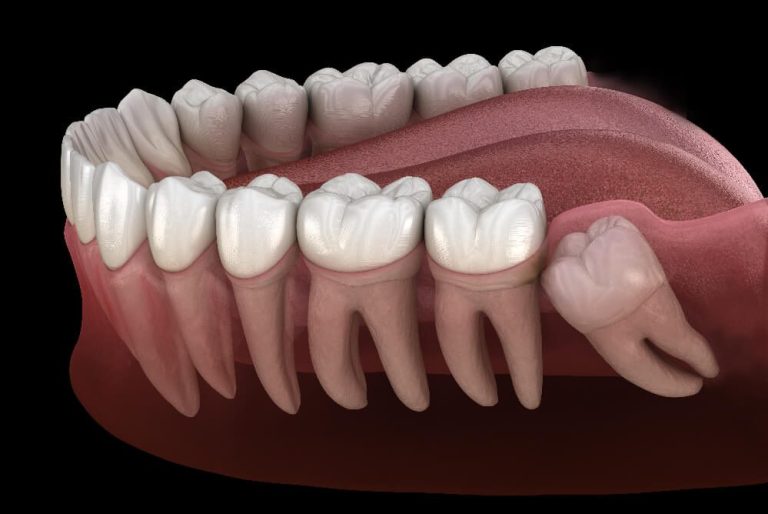
If Needed: Tooth Removal or Bone Grafting
If the damaged tooth is still in your mouth and cannot be saved, it has to come out first. Our tooth extraction page explains what that visit involves.
If there is not enough bone to hold an implant securely, you may need a bone graft or a sinus lift, which adds a healing period before the implant goes in. The Canadian Dental Association notes that a bone graft may be possible when the jawbone has shrunk.
Whether the implant can be placed sooner or has to wait depends on your bone and the health of the area. Your dentist will explain after your scan.
Visit 3: Implant Placement
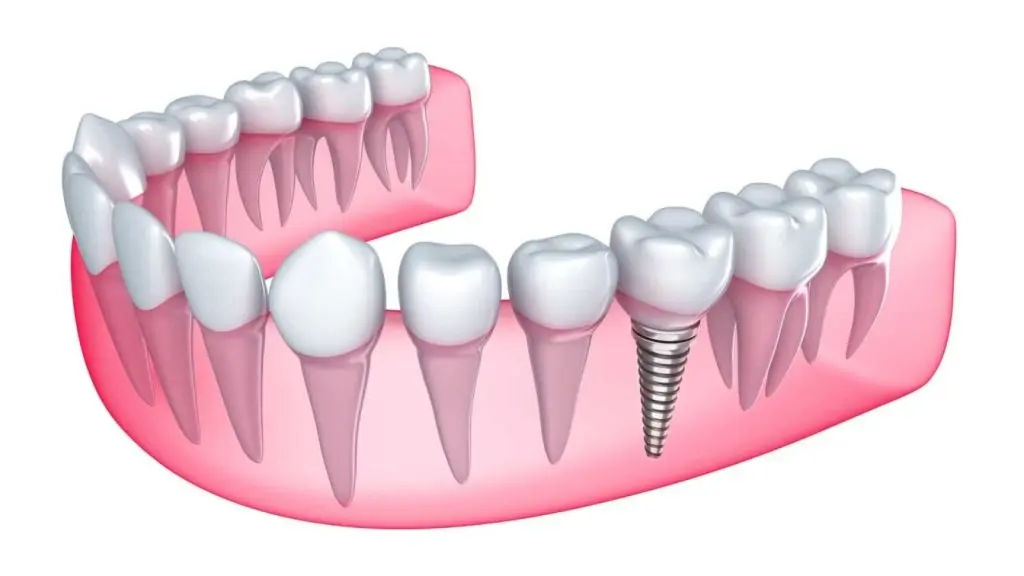
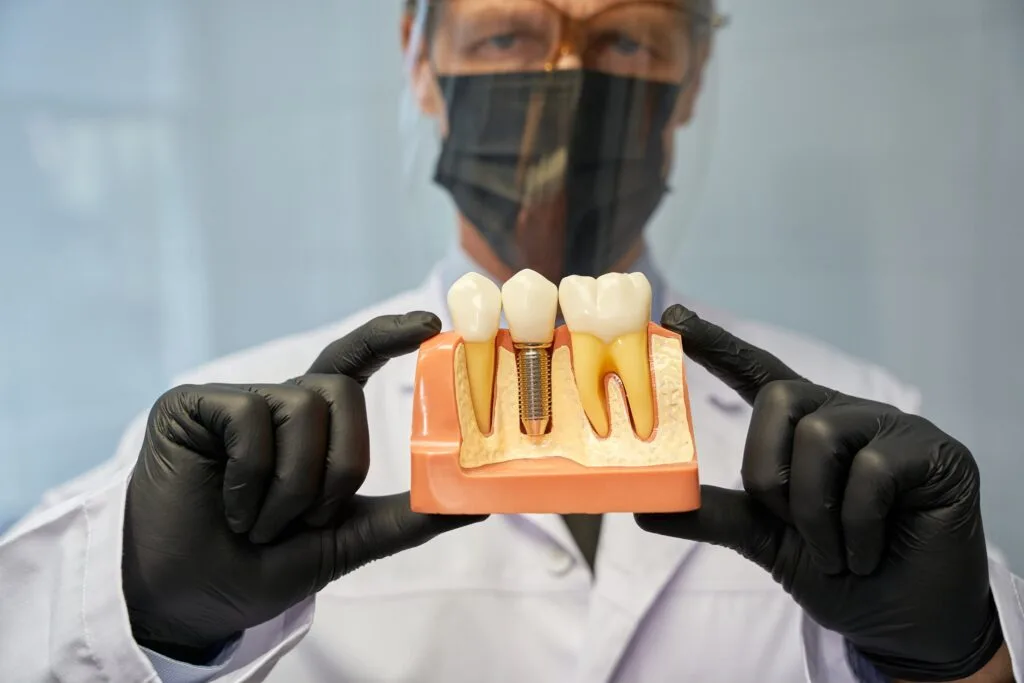
This is the visit most people picture as “getting the implant.” Following your surgical guide, the implant is placed in your jawbone. It is a small post, usually made of titanium, that acts like a tooth root. Placement is typically done with local anesthetic, so the area is numb.
Afterwards, slight soreness and swelling are normal, and over-the-counter pain relievers usually help. Cleveland Clinic says most people feel like themselves again within a week or so. Plan a lighter day afterwards.
The Healing Phase: Mostly at Home
Now comes the part that takes the longest but needs the fewest visits. Over the next few months, your jawbone grows around the implant and holds it firmly in place. This process is called osseointegration, and it is what makes an implant so stable.
During this time, you carry on with normal life, and your provider checks your progress from time to time. If the implant is going in a visible spot, such as a front tooth, ask whether a temporary tooth can cover the gap while you heal. Cleveland Clinic notes that a dentist can make a temporary tooth for implants near the front of the mouth.
Visit 4: Abutment and Crown Impressions
Once the implant has bonded with the bone, a small connector called an abutment is attached to it. We then take a digital scan for your final crown, which is custom-made to match the shape and shade of your natural teeth. Cleveland Clinic says the abutment step usually takes about an hour and, in some cases, needs a second minor procedure.
Visit 5: Your Final Crown
At this visit, your new crown is fitted and adjusted so your bite feels comfortable and natural. The Canadian Dental Association points out that fitting the replacement tooth can take several appointments, so one extra adjustment visit is possible. You leave with a complete tooth that you can brush, floss, and chew with like the rest of your teeth.
After That: Regular Checkups
Implants cannot get cavities, but the gums and bone around them still need care. Regular cleanings and exams, every six months or as advised, help protect your implant for the long term. Learn more in our guide on how to care for dental implants long term, or read our overview of how dental implants work.
What Can Add Visits or Months to Your Implant Plan?
Several things can make the process longer than the typical single-tooth path:
- Bone health. After a tooth is lost, the jawbone slowly shrinks, so a tooth that has been missing for a while may need a graft.
- Gum health. Active gum disease is treated before an implant is placed.
- Your overall health. Cleveland Clinic lists unmanaged diabetes among the conditions that can make implants a poor option, and says smoking or vaping can disrupt healing.
- How many teeth you are replacing. One implant is simpler than several.
- How quickly you heal. The bonding stage runs on your body’s schedule, not the calendar’s.
| Your situation | What may be added | Effect on your visits |
|---|---|---|
| One missing tooth, healthy bone and gums | Nothing extra | About four to six appointments |
| Damaged tooth still in the mouth | Tooth extraction first | Usually adds a visit and some healing time |
| Thin bone or a nearby sinus | Bone graft or sinus lift | Adds a healing period before the implant |
| Several teeth or a full arch | More implants and more planning | More appointments, mapped out after your scan |
If you are replacing several teeth or a full arch, expect more planning and more appointments. Our pages on full mouth reconstruction and dentures, including implant-supported dentures explain those options. The cost can also change with these factors, so see our guide to what dental implants cost in Ontario.