A chipped front tooth, a small gap, or a stain that will not budge can make you think twice before smiling. The good news is that fixing it may be simpler than you expect. Composite bonding is a minimally invasive way to repair and reshape teeth, often in a single visit and usually with little or no enamel removed.
At Shoreline Dentistry in Oakville, we use composite bonding to help patients feel proud of their smiles again. This guide explains what it fixes, what it costs, how long it lasts, and how it compares with veneers.
What Is Composite Bonding?
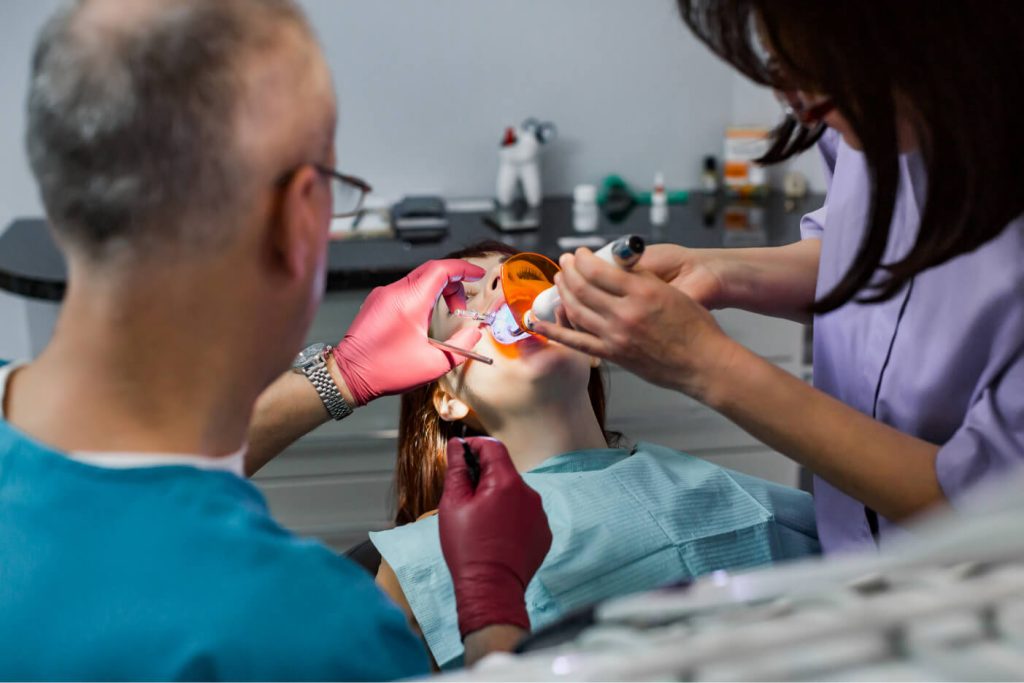
Composite bonding, also called dental bonding, teeth bonding, or cosmetic bonding, uses a tooth-coloured resin to repair and reshape a tooth. Your dentist applies the soft, putty-like material directly to the tooth, sculpts it to blend with your smile, and then hardens it with a special curing light.
Because the resin bonds to the surface of the tooth, bonding typically does not require enamel removal, and it is considered reversible, according to Cleveland Clinic’s overview of dental bonding. It suits small cosmetic changes, while bigger makeovers may call for other treatments.
Freezing is often not needed, unless the bonding is also being used to repair a decayed tooth. If dental visits make you nervous, our tips on overcoming dental anxiety can help you feel more at ease.
What Can Bonding Fix?
Bonding is versatile, which is why it is a favourite for small cosmetic touch-ups. It is often used to:
Repair chipped teeth and minor cracks
Close small gaps between teeth
Cover stains or discolouration that whitening cannot fix
Reshape teeth that look short, worn, or uneven
Make a slightly crooked tooth look straighter
Protect part of a tooth’s root that is exposed when gums recede
For a bigger change, your dentist may combine bonding with whitening, veneers, or other treatments as part of a smile makeover.
Bonding a Chipped Tooth
A small chip on a front tooth is a common reason people ask about bonding. In many cases, the dentist can rebuild the missing edge with resin that matches the rest of the tooth, often in one visit.
A large break, a deep crack, or a chipped tooth that hurts needs an exam first. It may need a dental crown or other restorative dentistry to protect it for the long term.
When Bonding Is Not the Right Fix
Bonding is not the answer for every smile concern. Your dentist may suggest a different option if:
A tooth is badly broken, deeply cracked, or weakened by a large cavity, where a crown can restore its strength
You want all of your teeth lighter, because resin does not respond to whitening
Your teeth are noticeably crowded or misaligned, where orthodontic treatment may suit you better
You want a dramatic, long-lasting change to several front teeth, where porcelain veneers may be a better fit
You have white spots from early enamel damage, which resin infiltration can fade without drilling
What to Expect at Your Bonding Appointment
For most people, a bonding visit is straightforward and takes about 30 to 60 minutes per tooth. Here is what usually happens:
Shade matching. Your dentist checks the tooth and uses a shade guide to pick the resin colour that most closely matches your natural teeth.
Preparing the surface. The tooth is gently roughened and coated with a conditioning liquid, so the resin can grip.
Shaping. The putty-like resin is applied, moulded, and smoothed into the right shape.
Hardening. A special curing light hardens the resin.
Finishing. Your dentist trims, shapes, and polishes the bonding, so it blends in and feels natural when you bite.
Because the resin is already hardened when you leave, you can usually eat normally right away. It is smart to avoid foods and drinks that stain, such as coffee, tea, and red wine, for the first 48 hours.
Composite Bonding vs Veneers: What Is the Difference?
Many patients ask how bonding compares with veneers. Both improve the look of your teeth, but they work differently:
Composite bonding uses resin that is applied and shaped directly on your tooth, often in one visit, with little or no enamel removed. It costs less, but it does not resist stains as well as porcelain, and it can chip over time.
Porcelain veneers are thin, custom-made shells bonded to the front of your teeth over a few visits. They are more stain-resistant and longer-lasting, but they cost more and may require removing a small amount of enamel.
Feature
Composite bonding
Porcelain veneers
Visits
Often one
A few
Enamel removed
Usually none
A small amount
Stain resistance
Lower
Higher
Typical lifespan
3 to 10 years
Usually longer
Cost per tooth
Lower
Higher
Neither is automatically “better.” The right choice depends on your goals, your budget, and the condition of your teeth, and our team can walk you through both during a cosmetic dentistry consultation.
What About Composite Veneers?
Composite veneers are a larger form of bonding: the resin covers the whole front surface of a tooth instead of one small area. Shoreline Dentistry offers both porcelain and composite veneers.
Composite veneers are more cost-effective than porcelain and can often be completed more quickly. The trade-off is that they may need occasional maintenance to keep their shine.
How Much Does Composite Bonding Cost?
There is no single price for composite bonding, because it depends on your specific needs. Dental bonding cost is usually shaped by:
How many teeth are being treated
The size of the area and how much reshaping is needed
Whether the work is mostly cosmetic or also repairs damage
Whether you need a small repair or full composite veneers
As a rough guide, Canadian cost estimates published in 2026 put composite bonding at about $200 to $600 per tooth before insurance. A small repair on one surface sits at the lower end, while composite veneers that cover the whole front of a tooth cost more.
Fees are not fixed in Ontario. The Ontario Dental Association publishes a suggested fee guide, but dentists are not required to follow it, and costs vary from office to office, as the ODA explains in its guide to how dental fees work.
These figures are general market estimates for 2026, not a quote and not Shoreline Dentistry’s fee schedule. Your exact price is confirmed at your consultation, where we explain your options and pricing clearly before any treatment begins.
Insurance, the CDCP, and Ways to Pay
If bonding repairs a broken or decayed tooth, it counts as restorative care, and dental plans often cover part of the cost. Bonding done only to change how your teeth look is usually not covered, so it is worth checking your plan before treatment.
The Canadian Dental Care Plan covers restorative services that treat cavities and broken teeth, but its CDCP Dental Benefits Guide lists cosmetic treatment, and veneers in composite or ceramic, as exclusions. Shoreline Dentistry accepts the CDCP, and our article on how the CDCP can benefit you explains the plan in more detail.
Whenever possible, we deal directly with your insurer online, so you only pay the portion your plan does not cover. If you do not have insurance, our in-house membership plan and patient financing through LendCare, on approved credit, can make treatment easier to budget for.
Wondering which cosmetic option suits your chip, gap, or stain?
With good care, bonding material typically lasts between three and 10 years before it needs to be touched up or replaced, according to Cleveland Clinic. How long yours lasts depends a lot on your habits and which teeth are treated.
The resin is durable, but it is not as strong as a natural tooth, so it can chip or stain over time. The good news is that bonding can usually be repaired or touched up, and a small chip does not always mean redoing the whole tooth.
Composite Bonding After 5 Years
What composite bonding looks like after 5 years depends largely on how well it is looked after. Coffee, tea, red wine, and smoking can stain the resin, and biting nails, pens, or ice can chip it.
When wear does show, a touch-up or polish at a checkup can often refresh the bonding before a full replacement is needed. Regular visits also let your dentist catch small problems early.
Will Composite Bonding Ruin My Teeth?
You may have seen worries online about bonding “ruining” teeth. Composite bonding usually needs little or no enamel removal and is considered reversible, so it is a conservative treatment that can be adjusted, repaired, or replaced later.
If you have seen bonding that looks bulky or mismatched, ask how your dentist plans the shape and shade. It is also fair to ask whether bonding is the right tool for your goal, since it suits small changes.
How to Care for Bonded Teeth
A few simple habits help your bonding stay bright and intact for longer:
Brush twice a day and floss daily
Avoid biting nails, pens, or ice, which can chip the resin
Cut back on staining drinks like coffee, tea, and red wine, and avoid smoking
Composite bonding is a gentle, budget-friendly way to fix chips, gaps, and stains, often in a single visit. It may be a good fit if:
Your teeth and gums are healthy
You want to change one tooth or a few small areas
You prefer a conservative option that keeps your natural enamel
You are comfortable with some upkeep, such as touch-ups over the years
Questions worth asking at your consultation:
Is bonding the right option for my tooth, or would a veneer or crown last longer?
How many teeth need treatment, and how long will it take?
Should I whiten my teeth first?
What upkeep should I expect, and how long might it last for me?
Will my insurance or the CDCP cover any part of it?
Led by Dr. Muzammil Zaidi and Dr. Irina Kuslya, our team blends evidence-based dentistry with a warm, personal touch. Whether you need one small repair or you are exploring a bigger change, we will help you decide what fits your smile and your budget.
Frequently Asked Questions
What is composite bonding?
Composite bonding is a cosmetic treatment where a tooth-coloured resin is applied to a tooth, shaped to blend in, and hardened with a light. It can repair chips, close small gaps, and improve the colour or shape of a tooth, usually in a single visit with little or no enamel removed.
How much does composite bonding cost?
Canadian cost estimates for 2026 put bonding at about $200 to $600 per tooth before insurance, depending on how many teeth are treated and how much work is needed. It is one of the least expensive cosmetic options. Your exact price is confirmed at your consultation.
How long does composite bonding last?
Bonding typically lasts between three and 10 years before it needs a touch-up or replacement. Its lifespan depends on your habits and which teeth are treated, and small chips can usually be repaired.
Is composite bonding covered by insurance?
It can be. If bonding repairs a damaged or decayed tooth, dental plans often cover part of the cost, while purely cosmetic bonding is usually not covered. The CDCP lists cosmetic treatment as an exclusion, so check your coverage first, and we can help.
Does composite bonding damage your teeth?
Bonding usually needs little or no enamel removal and is considered reversible, so it is a conservative treatment. If a bonded tooth chips or stains, it can usually be repaired, polished, or redone.
Does composite bonding hurt?
Most people find bonding comfortable, since it usually involves little or no enamel removal. Freezing is often not needed, unless the bonding is also repairing a decayed tooth.
Can you whiten composite bonding?
No. Whitening only changes natural enamel, so bonding keeps the shade it was matched to. If you want a brighter smile, whiten first, and then match the bonding to your new shade.
What is composite edge bonding?
Edge bonding adds composite resin to just the biting edges of the front teeth. It can repair small chips, even out worn or uneven edges, or make teeth look slightly longer.
Book Your Bonding Consultation in Oakville
Ready to fix that chip, gap, or stubborn stain? Our friendly team would love to help you smile with confidence again.